Washington homes need solar systems designed for real weather, not postcard sunshine. Before choosing panels or batteries, homeowners should understand this guide to solar panel efficiency and how performance changes with clouds, shade, roof angle and equipment quality.
Solar in Washington is not about pretending every day is clear and bright. It is about making the most of available daylight, storing energy intelligently and building a system that supports the way a household actually lives. For many homeowners, the most valuable setup is not solar alone, but solar paired with battery storage and clear performance monitoring.
A good Washington solar system should answer three questions: how much power can the roof produce, how much can the home use, and what happens when the grid goes down?
Why Solar Still Works in Washington
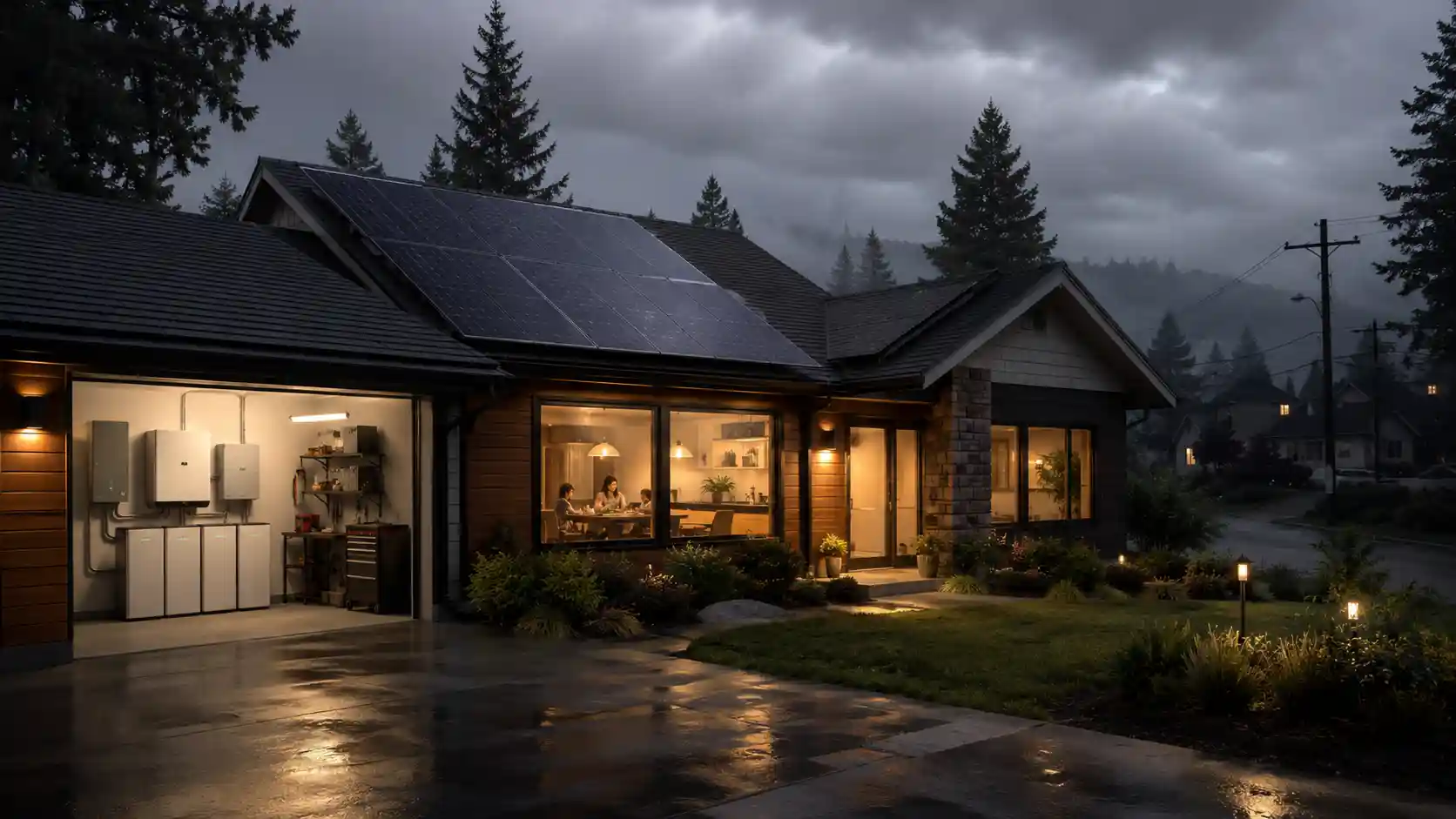
One of the most common concerns homeowners have is cloudy weather. It is a fair question. Washington is known for rainy seasons, soft light and long stretches of overcast sky. But solar panels do not require desert conditions to generate electricity. They work from daylight, and that means a properly designed system can still produce meaningful energy throughout the year.
The design simply has to respect the climate. That means choosing panels with strong low-light behavior, placing them where roof exposure is best, avoiding avoidable shade and pairing the system with technology that helps homeowners see what is happening day by day.
The goal is not perfect weather
No solar system performs at its maximum rating every hour. The goal is consistent annual production, predictable savings and a system that fits the home. In Washington, that often means paying close attention to roof layout, module quality, inverter strategy and whether battery storage makes sense.
Seasonality should be expected
Summer production will usually be stronger because days are longer and brighter. Winter production may be lower, but that does not mean the system is failing. A good proposal should set realistic expectations for seasonal output rather than quoting only ideal conditions.
Start With the Home’s Energy Pattern
Solar design should begin with electricity usage, not with the number of panels that can fit on the roof. Two similar homes can need very different systems if their energy habits are different.
A family that works from home, charges an electric vehicle and uses daytime appliances may benefit differently from a household that is mostly away during the day and uses more electricity in the evening.
Details worth reviewing
- Average monthly electricity use
- Seasonal changes in consumption
- Daytime versus evening energy habits
- Electric vehicle charging plans
- Heat pump or HVAC usage
- Backup power needs during outages
- Future plans for battery storage or generator integration
A practical homeowner note
If your electricity use is likely to grow in the next few years, say so during the design stage. Adding an EV, a hot tub, a home office, a heat pump or more electric appliances can change what “right-sized” solar looks like.
Roof Design Matters More Than Most People Think
A solar panel is only as useful as the sunlight it receives. Washington homes can have complex rooflines, tall trees, nearby buildings, chimneys, dormers and changing shade throughout the year. A careful roof review helps prevent a system from looking good on paper but underperforming in real life.
Orientation and usable space
South-facing roof sections are often attractive for solar, but east- and west-facing areas can also play a useful role depending on system goals and household energy habits. The best design may use more than one roof plane to balance production through the day.
Shade from trees and roof features
Washington’s trees are beautiful, but they can affect solar performance. Shade from evergreens, chimneys, vents, neighboring structures or roof equipment should be evaluated before the layout is finalized.
One shaded panel in the wrong system design can reduce more production than a homeowner expects. That is why inverter choice, panel grouping and monitoring all matter.
Panel Quality Is a Long-Term Decision
Solar panels are expected to work for decades, so the cheapest option is not always the best value. Homeowners should compare efficiency, temperature behavior, degradation, warranty coverage, appearance and real-world reliability.
The right panel is not simply the one with the highest wattage. It is the one that performs well on your roof, in your climate, for the life of the system.
Why efficiency matters on Washington rooftops
Efficiency becomes especially important when roof space is limited or partially interrupted by shade, vents, skylights or roof angles. Higher-efficiency panels can help generate more power from the same usable area.
Durability should not be treated as a footnote
Panels in the Pacific Northwest may face moisture, wind, seasonal temperature changes and winter weather. A durable module with strong warranty support can make the system feel more dependable over time.
Appearance matters too
For many homeowners, solar is a visible home improvement. All-black panels or cleaner module designs may be preferred on front-facing roofs where the system becomes part of the home’s exterior look.
Battery Storage Changes the Conversation
Solar panels produce electricity when daylight is available. Battery storage helps decide what happens next. Instead of sending unused power away immediately or relying fully on the grid after sunset, a battery can store energy for later use.
In Washington, batteries are often discussed for two reasons: evening energy use and backup power. The right battery setup can help a home use more of its own solar energy while also supporting selected loads when the grid is unavailable.
When battery storage may make sense
- The home uses significant electricity after sunset
- The area experiences occasional power outages
- The homeowner wants backup for essential circuits
- The household plans to add an EV or more electric appliances
- The system is designed for greater energy independence
Backup power needs should be specific
“Backup for the whole house” and “backup for essentials” are very different design goals. Refrigeration, lights, internet, medical devices, garage doors and selected outlets may require a smaller and more practical battery setup than full-home backup.
Monitoring Turns Solar Into Something You Can Manage
Modern solar monitoring is not just a nice extra. It helps homeowners understand how much electricity the system is producing, when production changes and whether the system needs attention.
Monitoring can show daily production, seasonal trends and possible drops in output. This is especially useful in a climate where homeowners may wonder whether cloudy weather, shade or equipment issues are affecting performance.
What good monitoring should help you see
- How much energy the system produces each day
- Whether production is lower than expected
- How battery charging and discharging behave
- How much energy the home uses from solar, battery and grid
- Whether a panel, inverter or gateway needs attention
Do Not Forget the Installation Experience
Solar is not only a product purchase. It is an electrical and construction project on your home. The installer’s process matters: site evaluation, design, permitting, utility coordination, roof protection, electrical workmanship, inspection and long-term support all shape the final experience.
A strong installation company should explain the system clearly, answer questions without rushing and show how the design supports the homeowner’s goals.
Questions to ask before signing
- How was the recommended system size calculated?
- Which roof areas will be used, and why?
- How does the design account for Washington weather and shade?
- Which panels, inverter and battery options are included?
- What will be backed up during a grid outage?
- What monitoring tools are included?
- Who handles permits, inspections and utility paperwork?
- What warranties apply to panels, battery, inverter and labor?
Solar, Battery or Generator: Choosing the Right Mix
Some Washington homeowners only need solar panels. Others want solar plus battery storage. Some may also want a standby generator for extended outages or heavier backup loads. There is no single correct answer for every home.
Solar panels
Best for producing clean electricity during daylight hours and reducing long-term grid dependence.
Battery storage
Best for storing solar energy, supporting evening use and backing up selected loads during outages.
Standby generator
Best for extended backup needs when a home requires dependable power for longer outages or larger loads.
The best plan may combine technologies
A thoughtful energy plan may use solar for generation, batteries for short-term resilience and a generator for extended emergency coverage. The right mix depends on the homeowner’s comfort level, budget and backup priorities.
Final Thoughts
Solar in Washington works best when it is designed for Washington: cloudy days, seasonal shifts, tree shade, backup needs and real household energy habits. The strongest systems are not generic packages. They are tailored energy plans.
By looking carefully at roof conditions, panel quality, battery storage, monitoring and installation support, homeowners can make a more confident decision. The result is a solar system that does more than look good on a proposal — it supports daily life, lowers reliance on the grid and helps keep the home prepared for the future.